

Ceramic-Lined vs. Stainless Steel Tumblers: What the Lining Inside Your Cup Actually Changes
You've probably noticed the term "ceramic-lined" showing up more on drinkware listings lately. It sounds premium, but if you're like most people shopping for an insulated mug, you're not entirely sure whether it's a meaningful upgrade or just a marketing label on an otherwise ordinary tumbler.
It's a fair question. The lining inside your cup is invisible once the lid is on, so it's easy to assume it doesn't matter much. It does — particularly if you drink coffee or tea daily, care about taste, or have ever noticed that faint metallic edge in a drink you made in a standard stainless steel cup.
What a Standard Stainless Steel Interior Actually Does
First, let's be clear: bare stainless steel is a perfectly good material for drinkware. It's durable, non-porous, and doesn't leach chemicals. The issue isn't safety — it's flavor interaction.
Stainless steel is slightly reactive with acidic liquids like coffee and tea. Over time, especially if the interior isn't cleaned thoroughly between uses, the metal can impart a subtle metallic taste. You may not notice it on day one, but after a few weeks of daily use, many people find their morning coffee tastes a little off — and they can't quite figure out why.
This is also why coffee connoisseurs tend to be particular about the vessels they use. The material touching your drink is part of the flavor equation, even if it's a small part.
What a Ceramic Lining Changes
A ceramic interior coating sits between your drink and the metal wall of the tumbler. It's chemically inert, which means it doesn't react with acidic beverages the way bare steel can. The practical result: your coffee tastes like your coffee, not like the container it's sitting in.
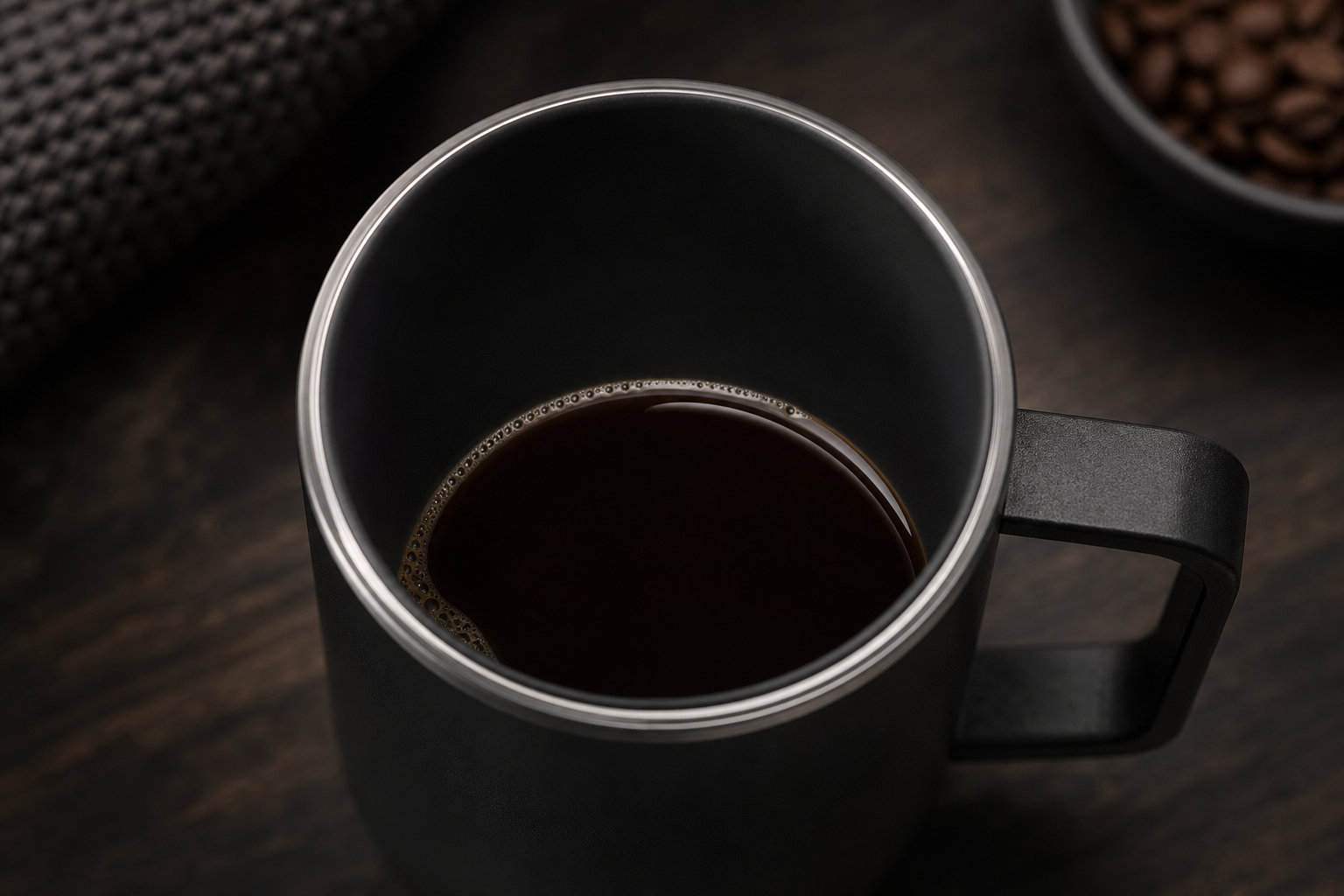
The Clean Hydration Co. Ceramic Lined Insulated Coffee Mug uses a CeraTech™ ceramic interior lining specifically for this reason. The seamless ceramic surface keeps the flavor profile of your drink intact — whether that's a single-origin pour-over in the morning or a cold brew you're nursing through an afternoon meeting.
Ceramic linings also tend to be smoother than raw stainless steel at a microscopic level, which has two practical benefits. Residue from coffee oils and tannins from tea have fewer places to cling, so the interior stays cleaner between washes. And because there's less surface texture for flavor compounds to bond to, you're less likely to get ghost tastes — that phenomenon where yesterday's green tea subtly shows up in today's coffee.
The Cleaning Difference (and Why It Matters More Than You'd Think)
Cleaning is where the ceramic vs. stainless debate gets practical fast. Bare stainless steel interiors, especially in narrow-mouthed tumblers, can develop staining and odor buildup that's genuinely hard to shift. The metal isn't absorbing anything, but residue accumulates in seams and surface irregularities.
A ceramic-lined interior is smoother and easier to rinse clean. A quick wash with warm soapy water is usually enough for daily maintenance. You're not fighting coffee stains the same way, and the surface doesn't hold onto odors as stubbornly.
If you've ever dealt with a musty water bottle or a tumbler that smelled like last Tuesday's latte no matter how many times you washed it, the ceramic lining addresses exactly that. For a deeper look at why bottle hygiene matters more than most people realize, this guide on cleaning your water bottle properly covers the science behind buildup and bacteria in reusable drinkware.
Does a Ceramic Lining Affect Insulation?
No — and this is worth saying clearly because some people assume the lining might compromise temperature retention. It doesn't. Insulation in a double-wall vacuum tumbler comes from the vacuum layer between the inner and outer walls, not from the interior surface material. The ceramic coating sits on top of the inner wall and doesn't interfere with that thermal barrier at all.
The Clean Hydration Co. mug pairs the CeraTech™ ceramic lining with double-wall vacuum insulation and an 18/8 stainless steel body — so you get taste neutrality and temperature retention, not one at the expense of the other. The no-sweat exterior means it won't leave rings on your desk, and the Ultra-seal Tritan™ lid handles the spill-proof side of things for commutes and road trips.
Where Bare Stainless Steel Still Makes Sense
Ceramic-lined isn't automatically better for every situation. If you're using a tumbler primarily for water, the taste difference is negligible — water doesn't have the same reactive relationship with steel that coffee and tea do. A bare stainless interior is also typically more scratch-resistant, which matters if you're rough on your gear in the field.
The ceramic lining earns its keep specifically for hot beverages consumed daily. If coffee or tea is the main event — and especially if you're particular about how it tastes — the ceramic interior is a genuinely useful spec, not a premium finish added to justify a higher price.
The Bottom Line
The lining inside your tumbler is the one part of the cup that's in direct, constant contact with everything you drink. For water, it's a minor detail. For coffee and tea drinkers who use their mug every single day, it's the difference between a drink that tastes right and one that tastes faintly metallic after a few weeks of use.
If taste neutrality and easier cleaning matter to you, the ceramic lining is worth paying attention to — not as a luxury feature, but as a practical one.
Compare for yourself — the Clean Hydration Co. Ceramic Lined Coffee Mug and Ceramic Lined Tumbler are both in stock and ready to ship. And if you're still working out your overall hydration setup, this guide to insulated water bottles is a solid next read.
Frequently Asked Questions
Does a ceramic lining chip or wear off over time?
Ceramic coatings can chip if the mug is dropped hard or if abrasive scrubbers are used regularly. For day-to-day use, a soft sponge and warm soapy water is all you need — and it keeps the lining in good condition much longer. Avoid metal utensils or harsh scouring pads inside the cup.
Is a ceramic-lined tumbler safe for acidic drinks like coffee and lemon water?
Yes. Ceramic is chemically inert, which means it doesn't react with acidic beverages. That's actually one of its main advantages over bare stainless steel — it won't impart any off-flavors to coffee, tea, citrus drinks, or other acidic liquids.
Can I put a ceramic-lined mug in the dishwasher?
It depends on the specific product — always check the manufacturer's care instructions. As a general rule, hand washing is gentler on ceramic coatings and on the vacuum seal of insulated drinkware. Dishwasher heat and detergents can degrade both over time, even if the mug is technically labeled dishwasher-safe.
Will I actually taste the difference between ceramic-lined and bare stainless steel?
For water, probably not. For coffee and tea — especially darker roasts or strongly brewed teas — many people notice the difference, particularly after weeks of regular use when a bare stainless interior has accumulated some residue. The effect is subtle at first but tends to become more noticeable over time.