

Why Your Sports Water Bottle Should Be Insulated (And What to Look for When You Buy One)
By mile three, the water in your bottle is lukewarm. You take a sip anyway, put it back, and don't reach for it again for another fifteen minutes. That gap — the one where you just didn't feel like drinking — is the problem.
If you've never thought much about your water bottle beyond 'does it hold water,' you're not alone. Most people grab whatever's cheap or closest. But if you're starting to take your training seriously — or just trying to drink more consistently throughout the day — the bottle you choose makes a real, practical difference. Temperature is a big part of that.
Cold water is simply more palatable than warm water. That means you're more likely to reach for it regularly during a workout, rather than waiting until you're already behind on fluids. A bottle that can't hold its temperature isn't just a minor inconvenience — it's quietly working against your hydration from the first hour.
What Insulation Actually Does (And Doesn't Do)
Insulation in a water bottle typically works through a double-wall vacuum construction — two layers of steel with the air removed from the space between them. Without air to carry heat, the transfer between the outside temperature and your drink slows dramatically. Cold stays cold. Hot stays hot.
What it doesn't do is refrigerate. If you fill a bottle with room-temperature water, it'll stay room temperature. Insulation preserves the starting temperature — it doesn't change it. So filling up with ice-cold water before a long run or a tough gym session is still your job. The bottle's job is to keep it that way.
This matters more than most people realize. On a hot day, an uninsulated plastic bottle can go from cold to warm quickly. A well-insulated stainless steel bottle can hold that chill for hours — through a full training session, a commute, and well into the afternoon.
Why Temperature Matters for Performance
Hydration isn't just about volume — it's about consistency. You need to be drinking at regular intervals throughout a workout, not just chugging at the end because you avoided the bottle for an hour. And the honest reason most people skip sips mid-workout isn't discipline — it's that warm water is unappealing.
Cold water also helps with perceived exertion. When your core temperature is climbing during intense exercise, drinking something cold provides a noticeable cooling effect. That's not a small thing when you're trying to push through the last twenty minutes of a hard session.
If you're new to thinking about hydration as part of your training, this breakdown of water's effect on cognitive function is worth reading — the mental side of dehydration is just as real as the physical, and it's often the first thing to slip.
What Separates a Serious Sports Bottle from a Basic One
If you're shopping for your first proper insulated sports bottle, the options can feel overwhelming. Here's what actually matters — and what's just marketing noise:
The spout design
During a workout, you're not sitting down to carefully unscrew a lid. You need one-handed access, a spout you can drink from without stopping, and something that won't leak when it's bouncing around in a bag or cage. A sports-specific bottle should have a spout built for that — not a wide-mouth opening that requires two hands and a steady surface.
Stainless steel construction
Stainless steel is the material of choice for insulated sports bottles for good reason. It doesn't absorb odors, doesn't leach anything into your drink, and handles the knocks and drops that come with active use. Plastic insulated bottles exist, but they don't hold temperature nearly as well and tend to degrade faster. For a first serious bottle, stainless steel is the right call.
A grip that actually works
A smooth, straight-sided bottle that looks great on a shelf can be slippery mid-run or when your hands are sweaty. Contoured shapes, textured sections, or a tapered body make a real difference when you're grabbing the bottle quickly and putting it back without breaking stride — something you'll notice immediately once you've tried it.
Easy to clean — properly
A sports bottle that you use hard gets dirty fast. Protein residue, sports drink sugars, and general gym-bag life mean you need a bottle you can actually get clean — not one where the bottom is a mystery you can't reach. This is where design matters as much as materials. Cleaning your bottle properly isn't optional — mold and bacteria build up faster than most people expect, especially with insulated bottles that stay damp inside.
Fits a standard bottle cage
If you cycle, this one's non-negotiable. Plenty of insulated bottles are too wide or too short to sit properly in a cage. A sports bottle that's actually designed for athletes should account for this — otherwise it's a gym bottle pretending to be a cycling bottle. Worth checking before you buy.
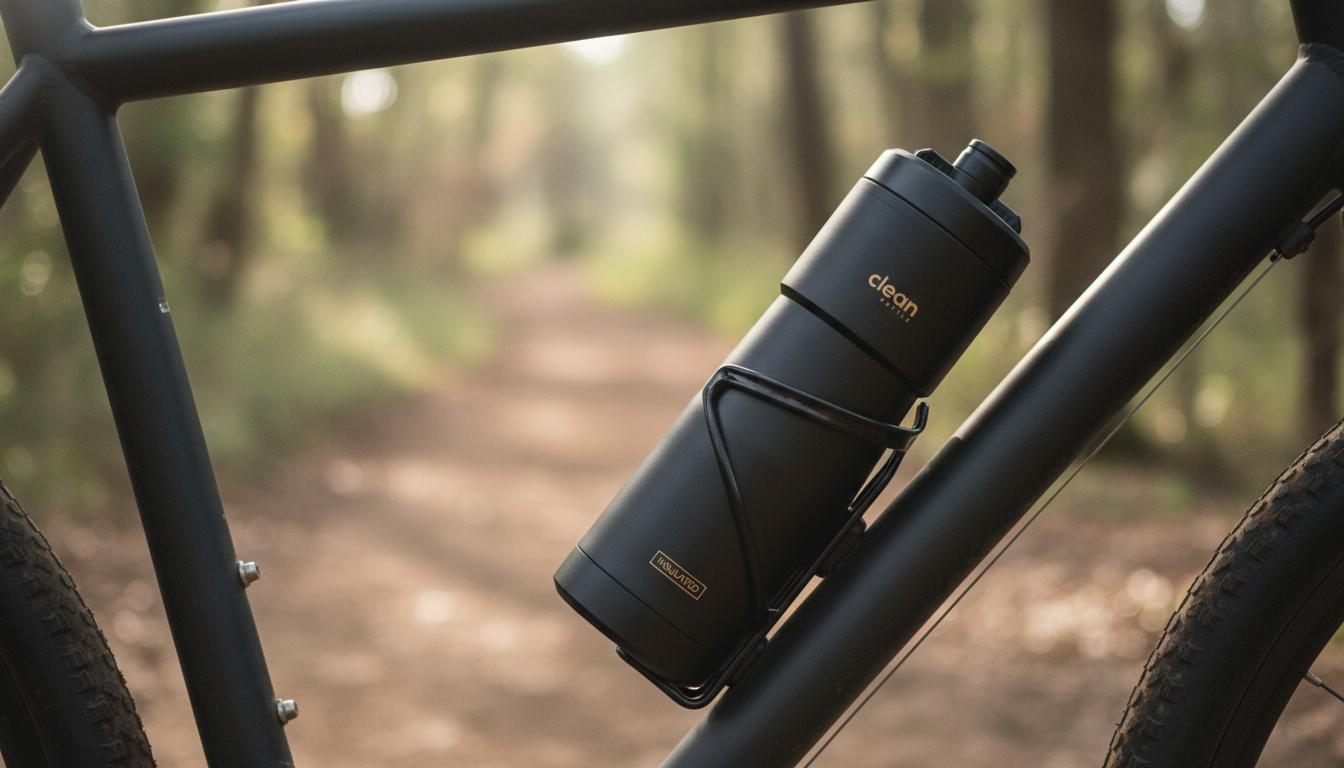
The Clean Bottle Insulated Sports Bottle
The bottle in the photo above is Clean Bottle's insulated sports bottle — matte black stainless steel with a contoured body and a sports spout designed for on-the-go drinking. Clean Bottle, now operating as The Clean Hydration Company, is a Houston-based brand that has been building reusable drinkware around one principle since 2010: a bottle you actually use is better than one that looks good and sits in a cupboard.
The insulated construction keeps cold drinks cold through a full training session. The stainless steel body is durable and doesn't hold on to flavors or odors. And the spout is designed for the kind of quick, one-handed drinking that real workouts require — not careful sipping at a desk. For someone buying their first serious sports bottle, it covers every practical base without overcomplicating things.
If you want more context on what makes an insulated bottle worth the investment versus a basic option, this guide to insulated water bottles covers the full picture — a good read before you commit to a purchase.
The Bottom Line
Your bottle is part of your kit. If you're putting real effort into training, nutrition, and recovery, letting your hydration fall apart because the water got warm by the second set is a fixable problem — and one of the cheaper fixes relative to everything else you invest in.
Get a bottle that holds temperature, fits your grip, cleans properly, and works the way you actually train. It's a simple upgrade that you'll notice every single session.
Shop the Clean Bottle Insulated Sports Bottle at cleanbottle.com — built for the workout, not just the shelf.
Frequently Asked Questions
Does an insulated water bottle keep drinks cold all day?
A quality double-wall vacuum-insulated bottle can maintain cold temperatures for many hours, but the exact duration depends on the starting temperature, how often you open it, and the ambient conditions. Filling with ice-cold water (or adding ice) at the start gives you the best result — insulation preserves the temperature you put in, it doesn't create coldness on its own.
Is stainless steel better than plastic for a sports water bottle?
For insulation, yes — stainless steel holds temperature significantly better than plastic. It also doesn't absorb odors or flavors over time, which matters if you use your bottle daily for sports drinks, protein shakes, or anything other than plain water. Stainless is generally the more durable, hygienic choice for active use, and a smart first investment if you're building out your training kit.
How often should I clean my insulated sports bottle?
After every use is the safest habit, especially if you're putting anything other than plain water in it. Insulated bottles stay damp inside longer than open bottles, which creates a better environment for bacteria and mold if left uncleaned. A thorough wash with warm soapy water — making sure you reach the bottom and the spout — is the baseline. For a full cleaning routine, see our guide on how to clean your water bottle properly.
Will an insulated bottle fit in a bike cage?
Not all of them — this is a genuine issue worth checking before you buy, especially if you're new to cycling. Many insulated bottles are wider than standard cages accommodate, or shaped in a way that makes them difficult to pull out one-handed while riding. If cycling is part of your training, look specifically for a bottle that's designed or confirmed to fit standard cage dimensions.