

The Bottle That Keeps Up
Most people have owned a standard plastic water bottle at some point. You fill it with ice water before a morning workout, and by the time you're halfway through, it's lukewarm. By afternoon, it's room temperature and tastes faintly of plastic. That's not a hydration problem — it's a bottle problem.
Insulated bottles solve this in a specific, measurable way. Understanding how they work makes it easier to choose the right one and actually use it consistently throughout the day.
What Double-Wall Vacuum Insulation Actually Does
The term gets used a lot in product descriptions, but here's what it means in practice. A double-wall vacuum insulated bottle has two walls of stainless steel with a vacuum — essentially an airless gap — sealed between them. Heat transfer requires a medium: air, liquid, or direct contact. Remove the air, and you remove the most common path for temperature to travel.
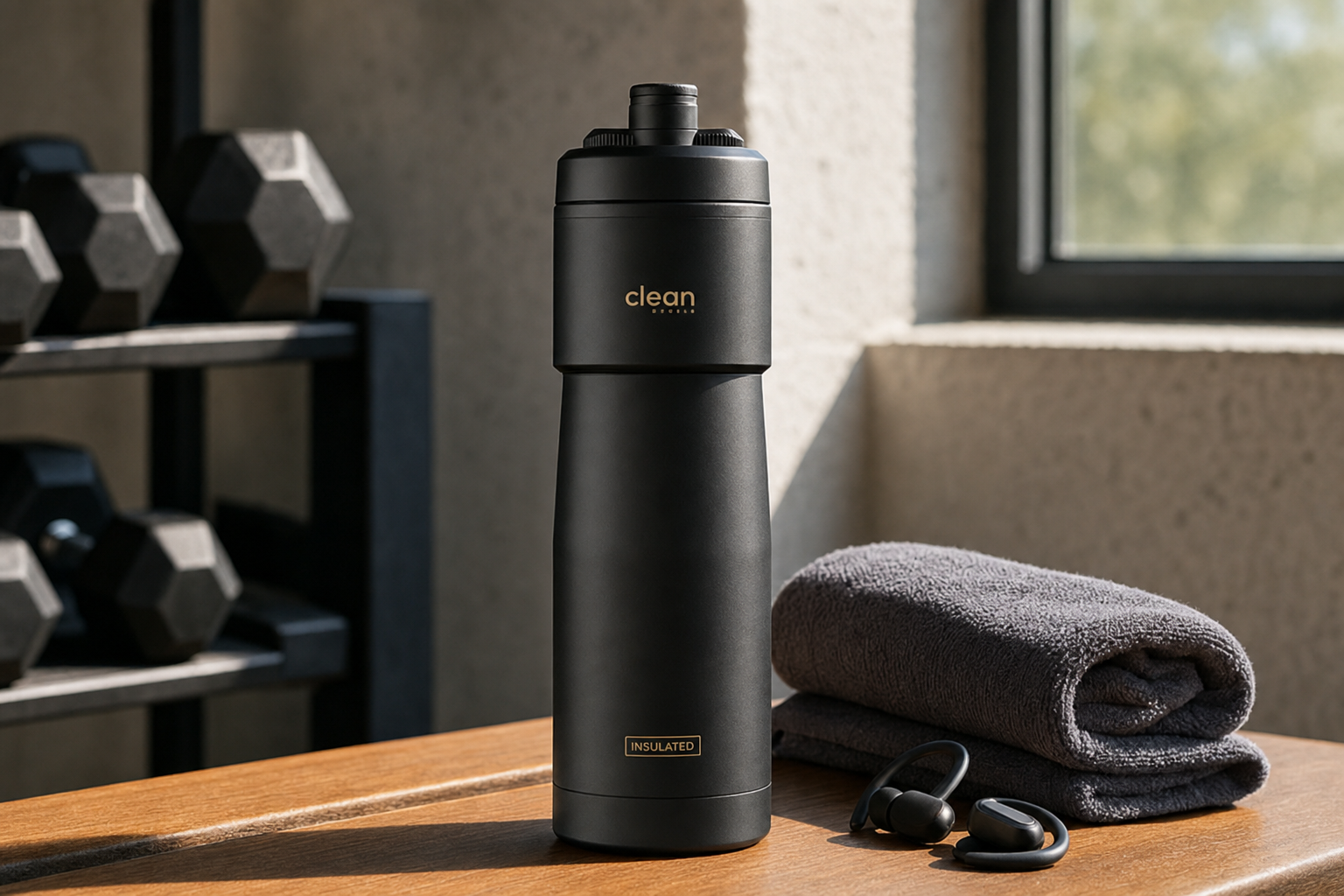
The result is a bottle that doesn't 'sweat' on the outside in warm weather, doesn't heat up when you hold it, and keeps the temperature of your drink stable for hours — not minutes. The insulated Clean Bottle, shown here in a matte black finish with 'INSULATED' marked near the base, is built around exactly this principle.
Cold Drinks Stay Cold
If you're filling your bottle before a morning run or commute, vacuum insulation means your water is still genuinely cold when you reach for it mid-afternoon. That matters more than it sounds — cold water is easier to drink consistently, which means you're more likely to hit your daily intake targets. If you want to understand how much that actually affects you, our post on how water affects your brain goes into the cognitive side of staying hydrated.
Hot Drinks Stay Hot
The same vacuum that blocks cold from escaping also blocks heat from escaping. A quality insulated bottle handles both — morning coffee on a commute, tea at a desk, or a warm drink on a cold trail. You don't need a separate thermos. If you're comparing bottles to thermoses for this reason, our thermos guide breaks down the key differences.
Standard Bottles vs. Insulated: A Practical Comparison
- Temperature retention: Standard bottles offer none. An insulated bottle keeps drinks cold or hot for hours depending on the model.
- Condensation: Standard bottles sweat in warm conditions, soaking bags and surfaces. Double-wall insulation eliminates this entirely.
- Taste: Single-wall plastic bottles can transfer flavors and odors over time. Stainless steel interiors don't.
- Weight: Insulated bottles are heavier than thin plastic — a real trade-off for ultralight activities, but worth it for most daily-use scenarios.
- Durability: Stainless steel handles drops and daily wear far better than standard plastic.
Where Insulation Actually Changes Your Day
The Morning Commute
You fill the bottle before leaving. By the time you're at your desk and into your first meeting, the water is still cold. No stopping for a drink, no warm water you keep putting off finishing. Consistent hydration without thinking about it.
A Full Workout
For gym sessions, cycling, or longer runs, an insulated bottle means you're not choosing between carrying ice or drinking warm water. The temperature holds through the session. For a deeper look at what to prioritize in a workout bottle specifically, see our guide on athletic and fitness water bottles.
Travel Days
Airports, long drives, and time zones make hydration harder. An insulated bottle you can refill at any fountain — and that keeps your drink at the right temperature regardless of the environment — simplifies the whole day. It's also one less thing to buy at the gate.
The Clean Bottle Difference
Clean Bottle was built around one idea: a bottle you can actually clean properly. The brand's patented removable bottom design means you can reach every surface inside — no buildup, no hidden mold, no lingering odors. That matters more in an insulated bottle than a standard one, because insulated bottles tend to be used longer and more consistently.
The insulated model shown here carries that same design philosophy into a sleek, matte black stainless steel build. It's made for all-day use — not just a single workout or a single commute, but the whole day, refilled as needed, staying clean between uses. Keeping your bottle genuinely clean is a bigger deal than most people realize — our post on how to clean your water bottle properly covers what actually grows inside bottles that aren't cleaned thoroughly.
What to Look For in an Insulated Bottle
If you're evaluating options, these are the details worth checking:
- True vacuum insulation — not just double-wall construction. The vacuum is what does the work.
- Stainless steel interior — resists odors and doesn't affect taste.
- A lid that seals properly — insulation only works if the bottle is actually closed.
- Cleanability — wide openings or removable components make a real difference in long-term hygiene.
- Size that fits your day — a bottle that's too large to carry gets left behind.
Ready to Hydrate Clean All Day?
Shop the insulated Clean Bottle lineup at cleanbottle.com and find the bottle that fits your routine — built to keep your drink at the right temperature and easy enough to clean that you'll actually do it.
Frequently Asked Questions
How long does an insulated water bottle keep drinks cold?
This varies by bottle and conditions, but quality double-wall vacuum insulated bottles are generally designed to keep drinks cold for many hours — often through a full workday. Factors like how often you open the lid and the ambient temperature affect performance.
Is an insulated water bottle worth it for everyday use?
For most people, yes. The temperature retention means you're more likely to drink consistently throughout the day, and the stainless steel construction holds up to daily use far longer than standard plastic bottles. The upfront cost is higher, but the durability and usability make it a practical long-term choice.
Can insulated water bottles hold hot drinks as well as cold?
Yes. Double-wall vacuum insulation works in both directions — it slows heat transfer whether your drink is hot or cold. The same bottle you use for cold water on a run can hold hot coffee or tea on a cold morning commute.
How do I clean an insulated stainless steel water bottle properly?
Warm soapy water and a bottle brush handle most daily cleaning. The challenge with many insulated bottles is reaching the bottom and the lid components thoroughly. Bottles with removable parts — like Clean Bottle's removable bottom design — make this significantly easier and reduce the risk of mold or odor buildup over time.